
How I (Unexpectedly) Became a Registered Dietitian
If you had told 14-year-old me that I’d one day make a career out of nutrition, I would have laughed… probably while running on a treadmill for the third time that day and refusing to eat anything that wasn’t green.
My “nutrition journey” didn’t start with a wholesome love of food or dreams of helping others. It started with body image worries by age 10, which spiraled into something worse by my early teens. Looking back, I’d diagnose myself with the purging subtype of anorexia — heavy food restriction, excessive exercise, and multiple daily rounds of making myself throw up.
After losing about 25 pounds, I started hearing comments about how “healthy” I was. My status as healthy was coming only from my extremely restricted food intake, rigid exercise habits, and increasingly smaller body. As a 14-year-old, I took that as the highest compliment - the smaller you are, the better, right?
An unfortunate surprise about making yourself throw up is… it gets harder over time. Your body starts fighting back. Which means you either stop, or you get increasingly creative with what you try. At first you can just use a finger, then two, then you use a toothbrush, and on it goes. I eventually reached a point where I had to decide: keep pushing my body to do something it very much did not want to, or try to get a handle on what was happening. I’m very grateful I chose the latter.
That’s not to say my eating disorder magically vanished. My disordered eating and notable body dysmorphia continued well into my 20s. These things linger — sometimes quietly, sometimes loudly — but over the years, I’ve learned how to manage it. I’ve come to accept that it will likely always be in the background, an interesting part of me that is always there and ready to come out when circumstances allow for it. Luckily, these days I can look at it far more objectively… and with a lot more compassion for my younger self. Numbers no longer send me into a tailspin, I don’t feel out of control around food, and I can look at myself with far more kindness than younger me ever could.

Me in my early 20’s, looking at pictures like this and being convinced I was fat, restricting food, and using exercise as a means to get smaller.
One unexpected turning point came when my partner convinced me to start going to the gym. I wanted nothing to do with it — it felt intimidating, uncomfortable, and like something “other people” did. But I agreed (reluctantly) and, over time, my confidence grew. Eventually, I felt comfortable going on my own — though still only at very early hours to avoid crowds. Strength training, especially, shifted my mindset in ways I didn’t expect. I started to care less about how small I could make my body, and more about what my body could do. I celebrated lifting heavier weights, running farther, and recovering faster.
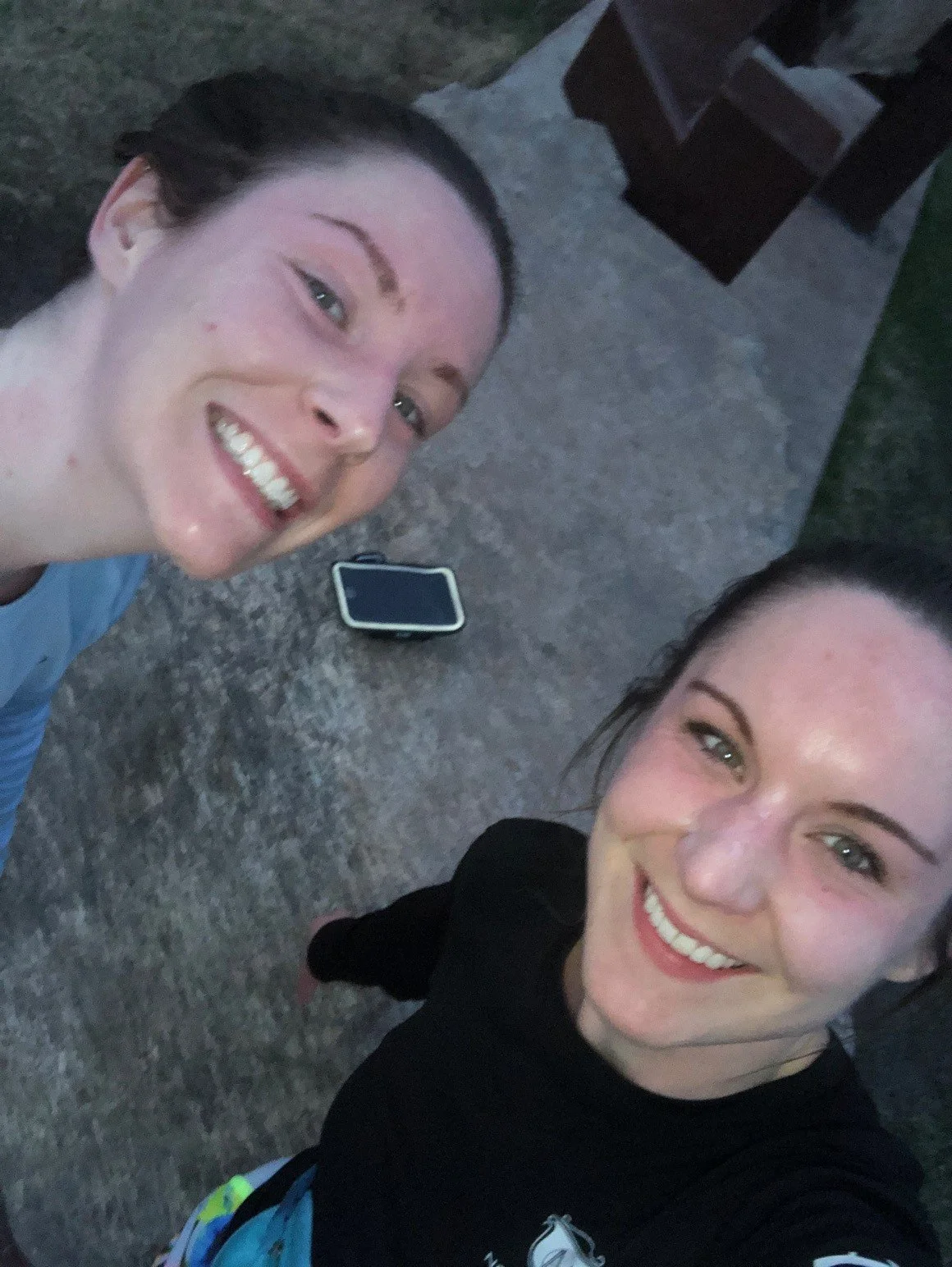
Traditional end of run selfie - now my motivation for exercise is to see what my body is capable of doing, not seeing how little space I can occupy. Let me tell you, it makes it a lot more fun (as does having a running buddy!)
That shift also changed how I saw food. Instead of something to restrict, it became fuel — protein, fiber, and healthy fats to help me feel good, train harder, and recover well. It was the beginning of a much healthier, more functional relationship with both food and my body.
Somewhere along the way, my curiosity about nutrition deepened. I went from calorie-counting to diving into the science — how nutrition impacts strength, energy, blood sugar, longevity… all of it. Podcasts with experts like Dr. Rhonda Patrick opened my eyes to just how fascinating (and complex) the field really is.
After finishing my neuroscience degree, I wasn’t sure what I wanted to do next. My mom offhandedly mentioned that I “liked those nutrition podcasts” and should maybe go into nutrition. At the time, I didn’t even know what a dietitian was. But after some research, I realized I could study at the University of Alberta and start learning more.
Through a lot of self-reflection, I recognized that I didn’t just want to heal my own relationship with food — I wanted to help other people feel their best. Whether that’s through intentional nutrition, building strength, managing blood sugar, or taking the fear out of eating altogether, this is the work I love doing. And of course, let’s be honest — no one loves snacks more than I do, so a job where I get to talk about snacks? Does it even get better??
It’s been a winding road to get here, but every twist and turn has shaped the way I now practice as a Registered Dietitian — with equal parts science, empathy, and the firm belief that food should be something that supports your life, not something that controls it. If I could go back and change things I don’t think I would, even though not having to deal with an eating disorder (and the anxiety and depression that it stems from) would make my life soooo much easier. But while my life thus far would have been simpler, I strongly attribute my compassion, empathy, and patience to what I have learned going through mental health struggles myself. Without that, I certainly wouldn’t be the person I am today, and I don’t think I would trade that for a more straight forward path here.
